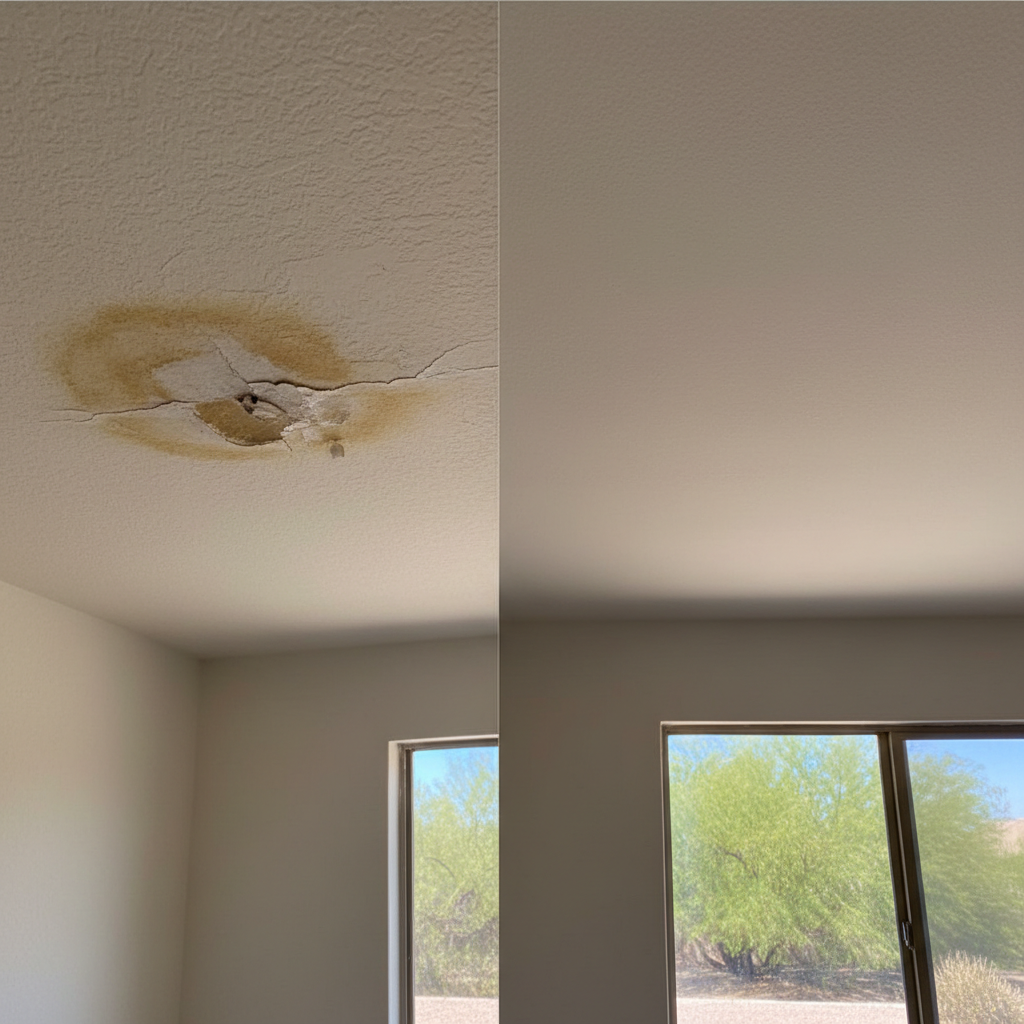
That brown stain spreading across your drywall will not fix itself. If you live out here in Maricopa, you already know how fast a small roof leak during our violent monsoon storms can turn into a sagging, stained ceiling disaster. When you are looking up at that mess, you have two choices: slap a patch over the damaged spot, or cut out the ruined section and replace the drywall entirely. Grand Restoration Service wants to talk about what makes sense for your home, your wallet, and our brutal desert climate.
The Quick Patch Job: Cheap Now, Risky Later
Patching a ceiling stain sounds easy enough. You spray some primer, slap on a matching texture, and paint over it. Homeowners often choose this route because it costs very little upfront and takes an afternoon. If the leak was a tiny one-off event, such as a loose supply line under the upstairs bathroom sink that you caught right away, patching might actually work out fine.
The problem starts when people try to patch over damage caused by a monsoon roof leak. Our intense heat bakes the roof tiles, and when the heavy rains finally hit, water sneaks through underlayment issues you did not even know you had. If the drywall got soaked and stayed damp for more than forty-eight hours, the structural integrity of that board is gone. Painting over soft drywall is just hiding a ticking time bomb. Plus, patching rarely hides the repair completely under our harsh Arizona sunlight pouring through large windows.
Full Replacement: Doing It Right the First Time
Cutting out the damaged drywall and hanging a fresh piece is more work, and there is no doubt about that. You have to deal with dust, matching the knockdown texture, and blending the paint. But durability is important: it is the only permanent fix for significant water intrusion.
When we pull down compromised ceiling sections over here in neighborhoods like Rancho El Dorado or The Estates, we often find hidden mold creeping in the dark cavity. Our dry climate usually stops mold from exploding everywhere, but the enclosed space between your roof deck and drywall holds humidity longer than you think. Replacing the board lets you inspect the insulation, check the framing for rot, and make sure you are starting fresh. Grand Restoration Service always tells homeowners that spending time and money on a full cut-out saves you from doing the job twice when the patched section eventually caves in.
Cost, Maintenance, and Maricopa Realities
We need to talk about dollars and cents. A DIY patch kit costs twenty dollars. Hiring a handy neighbor might cost one hundred dollars. A professional drywall replacement costs more because it involves remediation, proper sealing, texturing, and painting. But think about long-term maintenance. A patched weak spot will crack again when your air conditioning is running full blast all summer and shifting the house framing. A properly replaced section of drywall tied into the ceiling joists moves with the house.
If you are dealing with minor cosmetic peeling from a quick plumbing drip that was dried out instantly, you can go ahead and patch it. But if you have sagging drywall, crumbling texture, or water damage stemming from a roof breach during a summer storm, do not mess around with patches. Cut it out, dry out the cavity completely, and put up new board. Grand Restoration Service provides Water Damage Restoration Service for homes in Maricopa, Arizona.